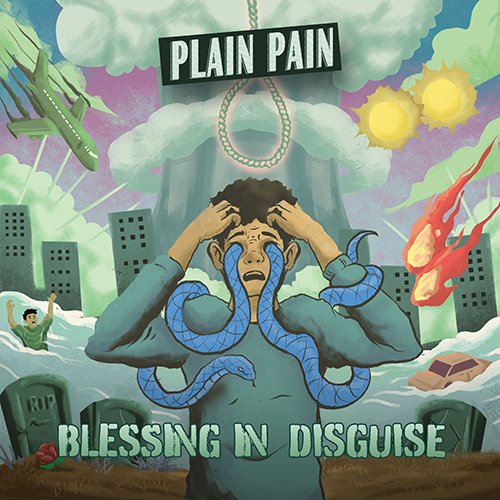
After years marked by breakups, lineup changes, quiet recovery, and loud catharsis, alternative rock unit Plain Pain finally announces their first full-length album, Blessings in Disguise, scheduled for release on 25 December 2025.
The album is a culmination of three years of emotional excavation, written largely by frontman Adyt as he processed a string of turbulent relationships—each leaving behind shards of hurt, clarity, and eventually, gratitude. Despite the heartbreak, the band frames the experience as a paradoxical gift.
This idea became the album’s thesis:
pain as a warning, heartbreak as direction, suffering as a disguised blessing.
A COLLECTION OF WOUNDS, LESSONS, AND TURNING POINTS
Across ten tracks, Blessings in Disguise dissects the emotional debris left by relationships that blurred love with manipulation, longing with denial, and devotion with damage. The narratives swing between rage, vulnerability, nostalgia, self-blame, and the uncomfortable clarity that follows heartbreak.
Musically, the album pushes Plain Pain into their most dynamic territory yet—faster, groovier reinterpretations of earlier singles, darker textures, and a louder sense of urgency. Songs previously released—“Second Sun,” “Deathwish,” and “Narasi Kenestapaan”—return in sharper forms, strengthened by the band’s evolved sound and emotional maturity.
TRACK-BY-TRACK THEMATIC SNAPSHOT
- “Second Sun” opens the album with a frantic confession of denial, anxiety, and misplaced hope—an anthem about loving someone who shines bright but never warms. The reimagined, groovier version hits harder than before.
- “Counterfeit” drags listeners into sleepless nights and looping trauma, wrestling with the guilt of giving “a second chance” that should’ve never been given in the first place.
- “Narasi Kenestapaan” stands as the band’s harshest monologue—an Indonesian spoken-word condemnation of ego, downfall, and karmic collapse.
- “Deathwish” returns more aggressive and desperate, detailing the suffocating weight of failure and the endless internal war to stay alive.
- “Empty Chariot” shifts the tone into bittersweet resilience, portraying a broken man still willing to carry someone anywhere—so long as they see him trying.
- “Solace” provides a brief moment of warmth: a vow to protect someone’s smile, even when the world grows darker and colder.
- “End to Torment” is a burial ritual for a relationship that turned hellish, a recognition that love can rot into torment if held too long.
- “Twisted Reality” deals with hindsight and clarity—realizing that someone loved you only when it was convenient and missed you only when they were lonely.
- “Misplaced Guilt” confronts manipulation head-on: the feeling of being framed as the villain when in truth you were the one holding everything together.
- “Epitaph” closes the album as a final letter—acknowledging memories, wounds, and the fact that someone once wrote your ending long before the story was finished.
A PAINFUL STORY, A NECESSARY RELEASE
As its name suggests, Blessings in Disguise isn’t about celebrating heartbreak—it’s about reframing it.
Each song serves as a timestamp of moments where love turned sour, promises decayed, and emotional labor became survival. But in hindsight, those very moments became red flags that saved the band’s frontman from something far worse.
The album stands as an emotional diary turned sonic explosion—Plain Pain at their rawest, loudest, and most honest.